WATERMELON
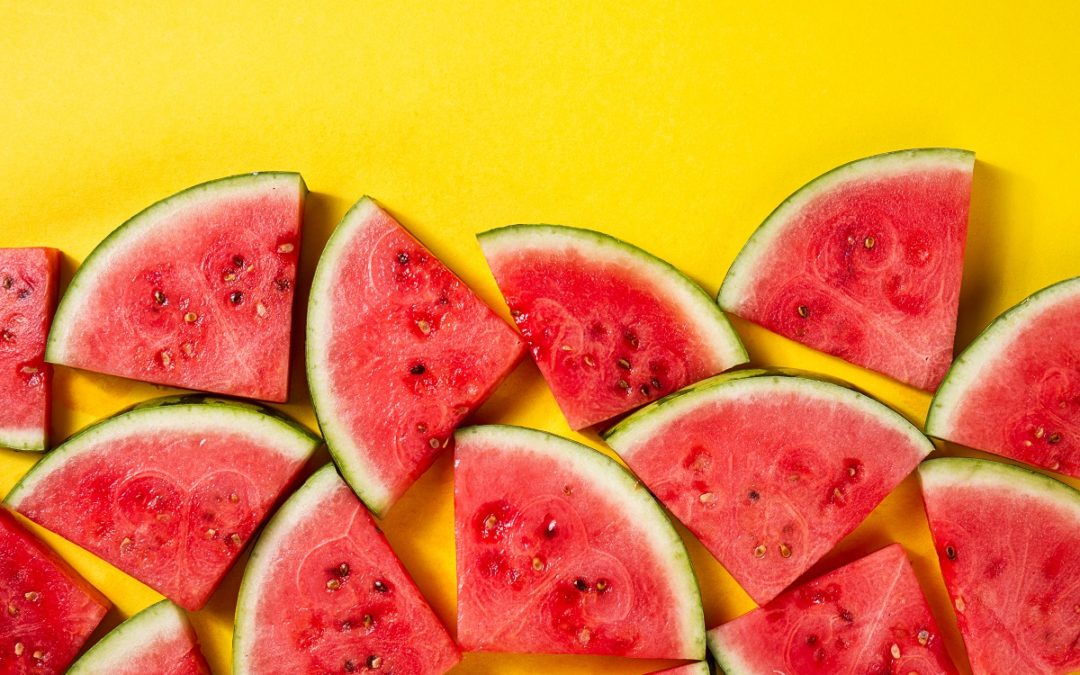
Watermelon is the ultimate refreshing summer fruit. It is incredibly low in calories and packed with water (92%). While it’s traditionally enjoyed as a sweet, standalone dessert, it can also be a vibrant addition to savory meals like salads.
Typically, watermelons feature a thick rind that ranges from deep green to striped or mottled white. They come in round or oval shapes and can grow to massive sizes, sometimes weighing up to 30 lbs (15 kg). The crisp flesh inside is usually a deep pinkish-red, speckled with small, hard, black seeds.
But if you are living a low-carb lifestyle, the big question is: Can you eat watermelon on a Ketogenic diet? Let’s look at the hard data.
 Nutritional Profile (Per 100g / 3.5 oz Serving)
Veličina 100 g
Calories: 30
Total Fat: 0.2g
Saturated Fat: 0.1g
Sodium: 1mg
Potassium: 112mg
Total Carbohydrates: 8g
Dietary Fiber: 0.6g
Sugars: 6.3g
Protein: 0.6g
Vitamin A: 11.5% DV · Vitamin C: 13.6% DV%
Calcium: 0.7% DV · Iron: 1.3% DV
Carbohydrates: The Critical Factor
Because watermelon is extremely low in calories (only 30 kcal per 100g) and highly hydrating, it feels light. However, because we track our macros rigidly on Keto, precision is everything.
The carbohydrates in watermelon come almost entirely from natural sugars, with very little fiber to offset them:
A 100g (3.5 oz) portion contains:** 0.6g of fiber, 6.3g of sugar, and **7.4g of Net Carbs** (8g total carbs minus 0.6g fiber).
An average wedge (approx. 1/16th of a standard watermelon): Contains roughly 1.5g of fiber, 15.7g of sugar, and 18.5g of Net Carbs (along with 75 calories).
Note on the sugar composition: About half of the sugar content in a watermelon is fructose, one-quarter is glucose, and less than a quarter is sucrose, with other trace sugars making up the rest.
Fats & Proteins
Just like cantaloupe and honeydew, watermelons are virtually fat-free. The trace amount of fat present is evenly split between saturated, monounsaturated, and polyunsaturated fatty acids. For all macro-tracking purposes, you can consider it a zero-fat food. Protein is also minimal, coming in at just under 1 gram per serving.
Vitamins for Longevity
A fully ripe, deep-red watermelon is significantly more nutrient-dense than a less mature, pale-pink one. Always look for peak ripeness! Watermelon is an excellent source of Vitamin C and Vitamin A, covering a solid percentage of your daily values.
Vitamin C is vital for accelerated wound healing, robust immune function, and anti-aging cellular support, while Vitamin A is critical for long-term eye health. A standard 150g serving also delivers about 7% of your daily value for copper and pantothenic acid, 5% for biotin, and 4% for Vitamins B1 and B6.
The Power of Lycopene
Watermelon possesses incredible antioxidant properties because it is a premier source of lycopene—a powerful carotenoid phytonutrient clinically proven to support healthy blood pressure. While tomatoes are famous for lycopene, a fully ripe watermelon actually contains even higher concentrations. Other protective antioxidants found in the flesh include flavonoids, carotenoids, and triterpenoids.
Watermelon naturally contains significant amounts of the amino acid L-citrulline. In the fitness world, concentrated citrulline capsules are highly popular pre-workout supplements used to maximize blood flow and athletic output. While whole-food doses vary, numerous sports science studies show that citrulline can significantly reduce muscle fatigue and soreness during intense exercise.
🍉 The Keto Verdict: Can You Eat It?
Yes, but portion control is absolute law. Watermelon is not strictly banned on Keto, but it is a “slippery slope” fruit. Because a single 100g (3.5 oz) serving costs you 7.4 grams of Net Carbs, eating a large, unmeasured bowl can instantly wipe out your entire carbohydrate allowance for the day and kick you out of ketosis.
If you want to enjoy watermelon this summer without sabotaging your progress:
- Always use a digital food scale to weigh your portion in grams.
- Stick to a strict 50g–100g limit, and track it immediately in your macro app.
- Pair it with a quality fat or protein (like a sprinkle of high-quality feta cheese and mint) to blunt any potential insulin response.